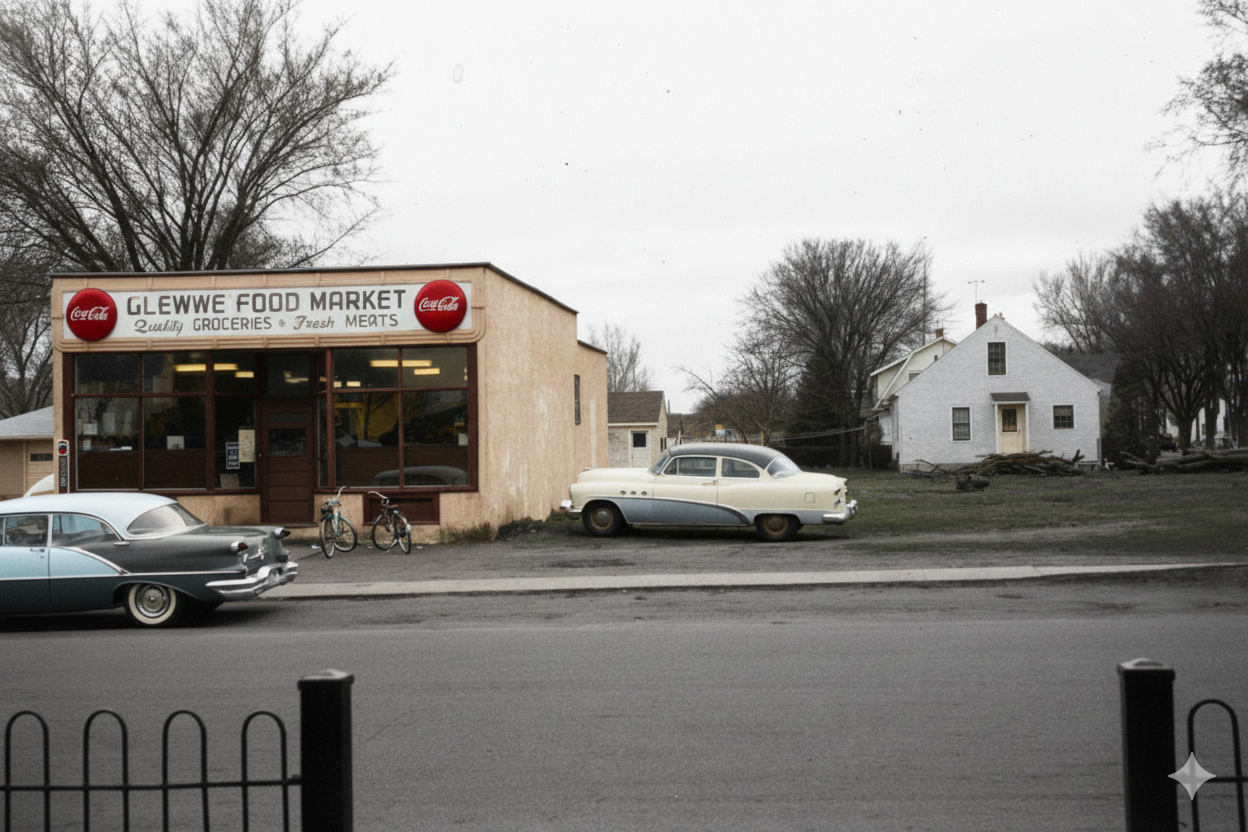
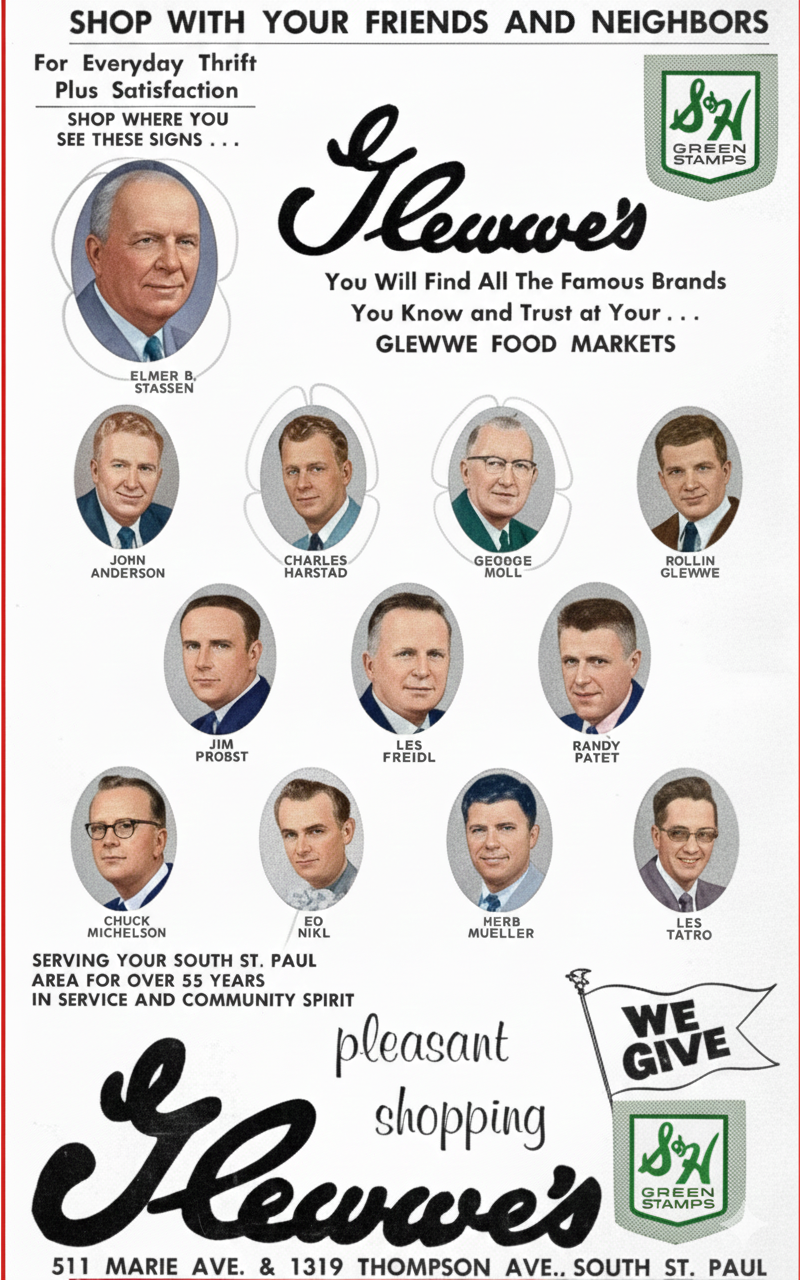
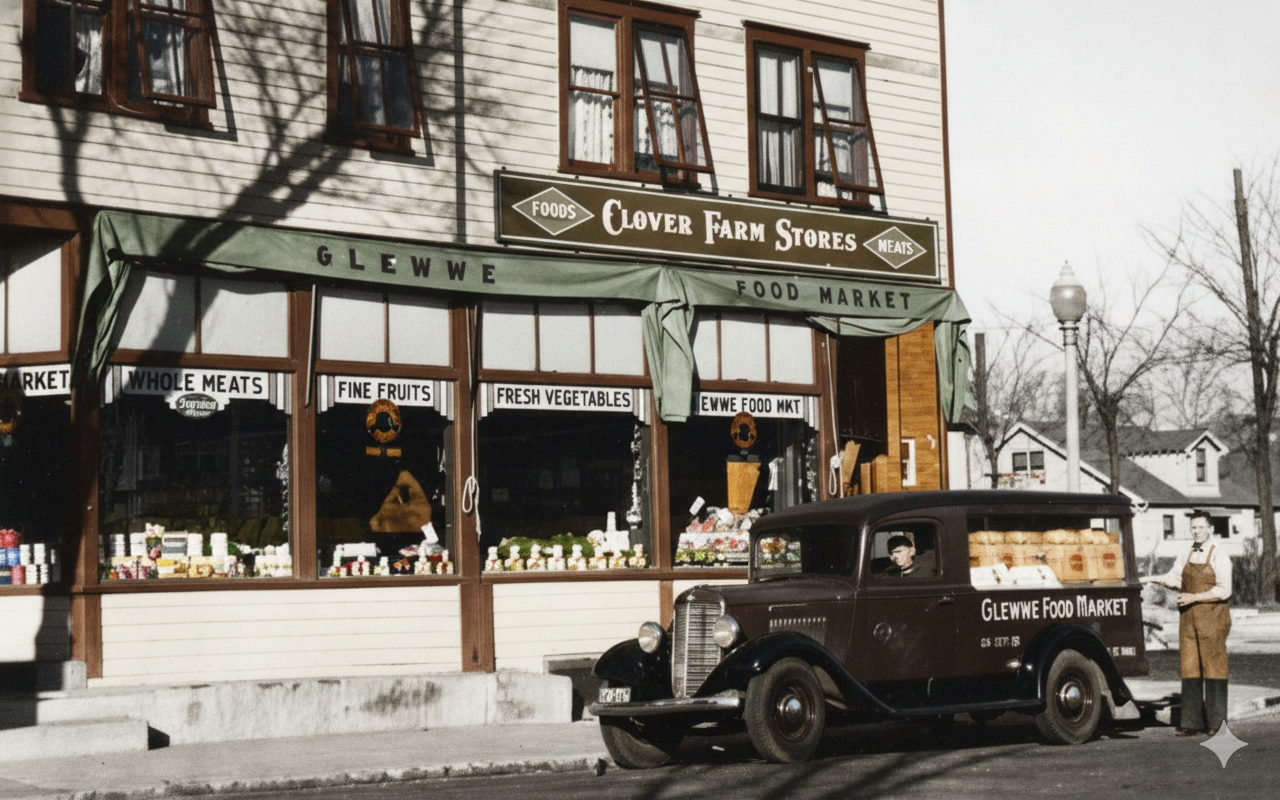
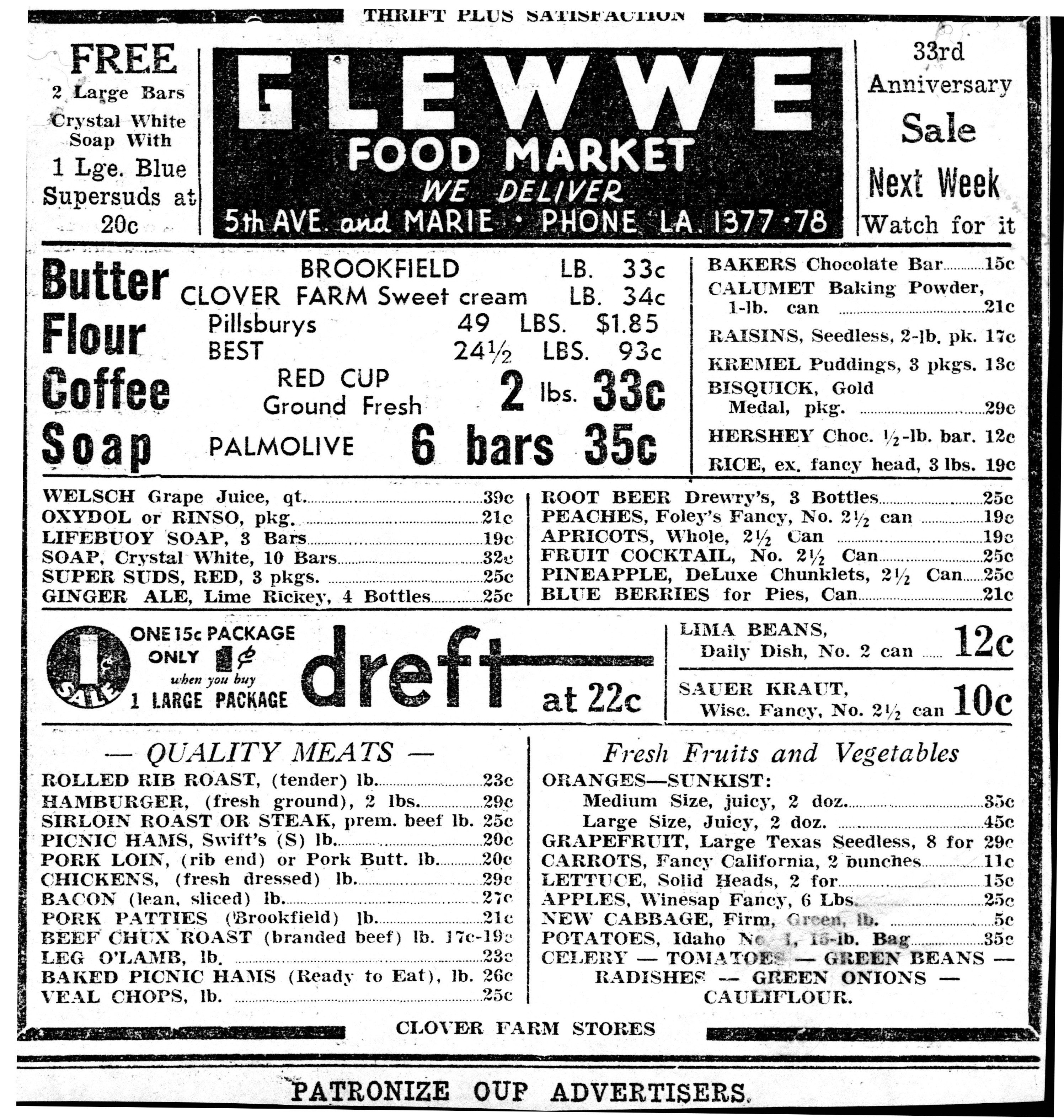
Glewwe Food Market

Thrift Plus Satisfaction
2025-12-16
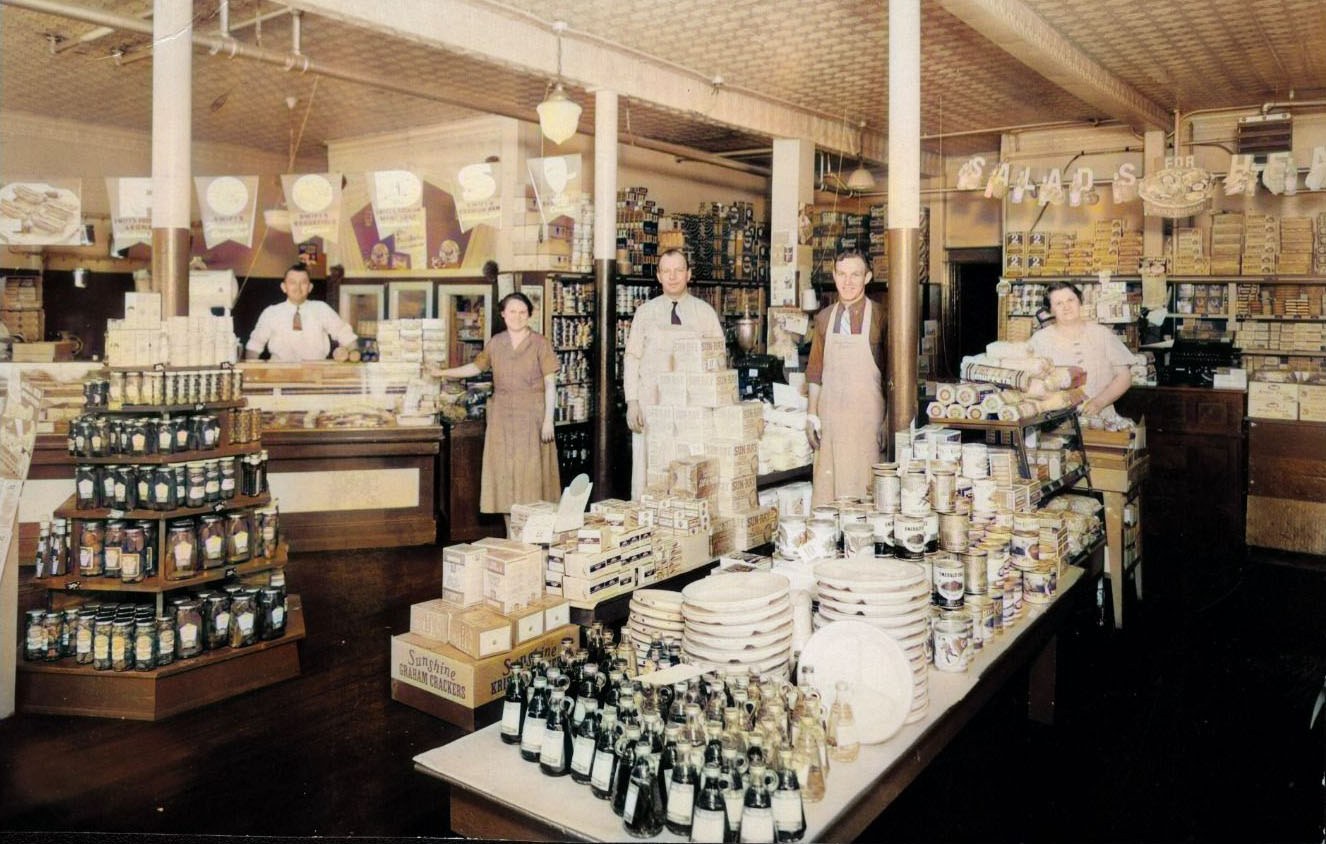
Serving the South St Paul community since 1903
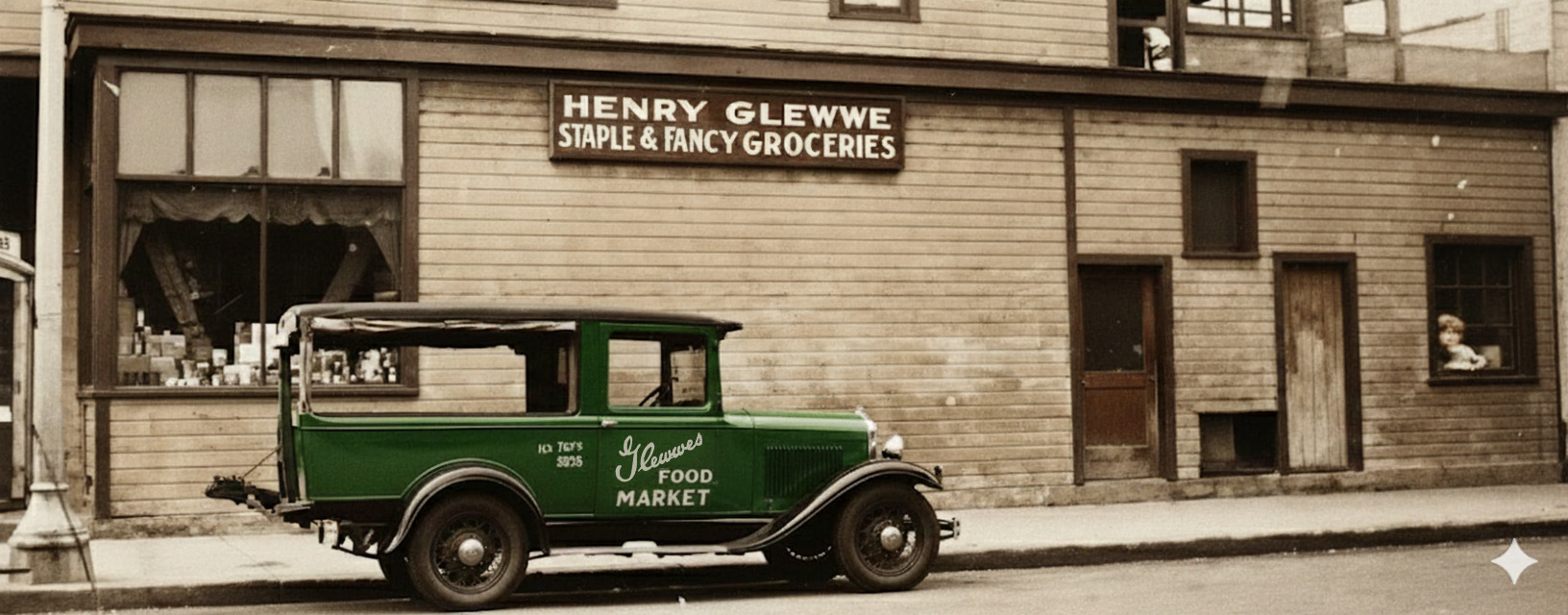
The Grocery Business Fifty Years Ago
By Ida Glewwe 1950
Fifty years is a long time to look back and recall what the grocery Business was like. It was even earlier than that, to be exact on March 1st - 1905 when the first Grocery on the hill of So.St.Paul was opened for business on the southeast corner of Second Street No. and Fourth Ave. Illness prevented the continuation and the business was sold after one year. In 1908 business was again resumed at 139- Fifth Ave. So. In a building built by H.Thasse and in recent years used as an Undertaking Parlor. In 1912 another move was made to the corner of Fifth and Marie
Ave. '
This account of reminiscence is of the time of the beginning of the business when the population of So.St. Paul was between 2000 to 3000 • The Streets were not graded, electricity for the city was being planned and telephones were not yet in common use.The heating of the building was done by the potbellied soft coal stove which dominated the center of the store space. Kerosene lamps were used for light. All this may seem very primitive but there were many other differences
in the manner of doing business in those days.
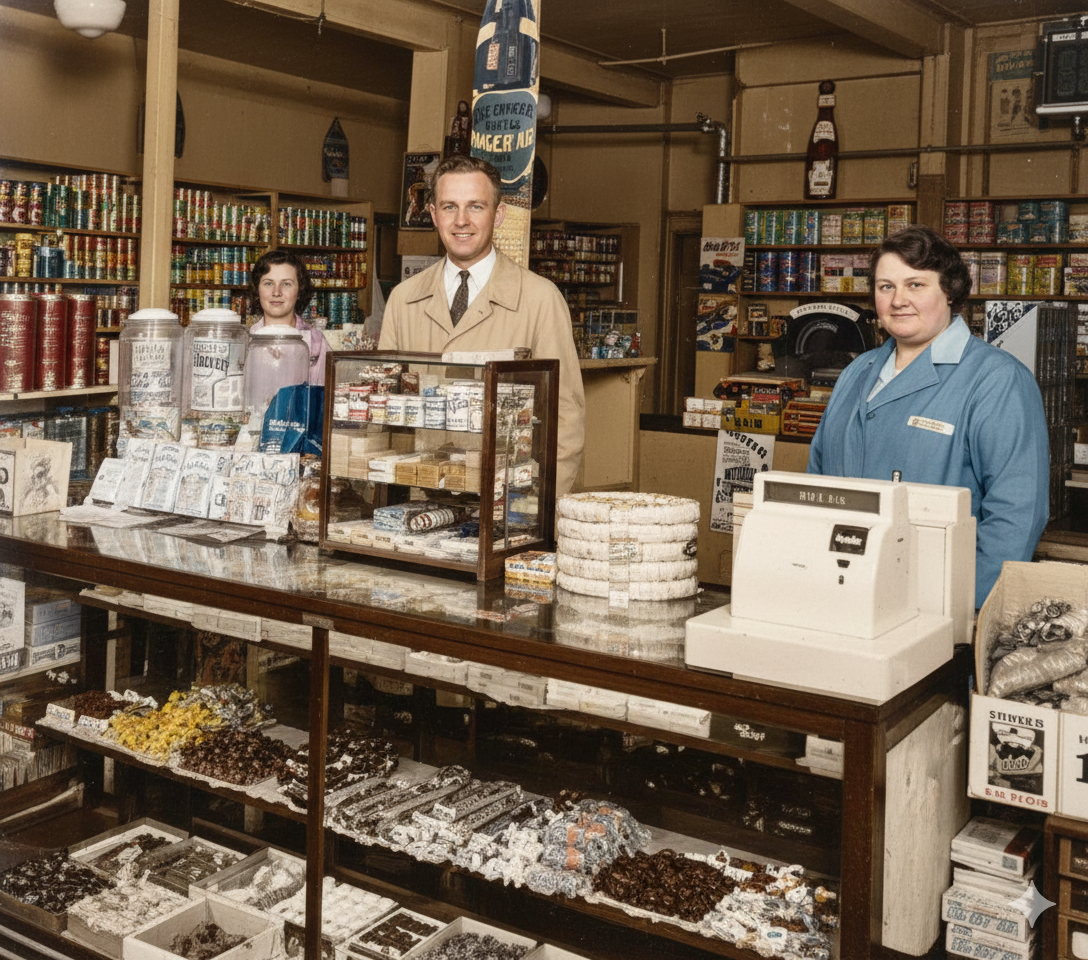
The present stock of items in a store of today numbers several thousand. It was much simpler in the early days. A few hundred items would completely stock a Grocery. Tea and Coffee were sold in bulk, as a rule three or four grades of Coffee with variation of prices. The Coffee was ground by hand until electricity was installed, and you selected your own kind of grind, coarse, medium, fine or pulverized. •It was quite a chore when the order called for five pounds of finely ground Coffee because it must first be ground coarse and then reground for the fine state. Tea came in several varieties also. The English Breakfast which was black and strong, the finer and milder Oolong, the Green Japan Tea and the Gunpowder which was a tender green leaf tea that was rolled into little pellets or balls. These Teas and Coffees were displayed in enameled and brightly decorated canisters ---. or bins and were an attractive addition to the store of that day.
Navy Beans, Rice, Tapioca, also Sugar, both granulated and powdered were bulk items and were found in bins lined up against the walls of the store underneath the shelving. No five- or ten-pound sacks of sugar for your convenience, it was always quoted as so many pounds for a. dollar. Karo Syrup was on the market but not in so many sizes and varieties as we have today. Log Cabin Syrup is an old timer also.
There were no detergents or the many many laundry products we have today. Ivory Soap was on the shelf together with 20 Mule Team Borax and about three kinds of bar soaps , Fels Naptha. Crystal White and the yellow Rose Queen. You made your own bleach with Cloride of Lime and Ammonia. Sal Soda was used as a water softener and Mrs Stewart's Blueing was one of the staples.
-In the rear room of the store you would find a row of barrels. One would be the barrel of Sour Kraut, another Dill Pickles, a smaller one of sweet pickles and maybe a small keg of Chopped Pickled Relish. On the shelf above the barrels, you would find the pint, quart. or even larger size of paper containers or pails in which these items were sold. There would also be two barrels of vinegar, one Amber or Cider and one of white Vinegar .You brought your own container or jug or if you came without you could purchase a half gallon jug for fifteen cents or a gallon size for twenty five cents with a new cork too.
Vinegars and Pickles were not bottled as yet. The barrel that really was frowned upon was the one containing salt Herring. These fish in their salty brine had to be brought out with a pair of tongs and wrapped in several layers of paper to keep them from dripping upon other merchandize This was a popular item of food when served with potatoes boiled in their jackets and no Grocer could serve with out stocking Salt Herring.
Canned Vegetables were limited to Peas, Corn, Tomatoes, and green and wax Beans and not too many grades of each. Fruits were limited to Pears, Peaches, and Pineapple and gallon containers of water packed Apple and Cherries which were used for pies. Dried Fruits were much in demand and also sold in bulk. Bananas have always had their place in the market but they came in large bunches or stalks which would be hung some where in the fruit department and the bananas cut off the stalk as needed for sale. It sometimes happened that one of those bright green snakes would slither out of the bunch while they were being hung or better yet, the hairy Tarantulas would make a sudden appearance.
 Apples were sold by the barrel. Russets, New York Baldwins, Spitzenbergers and the winter Greenings. No fancy wrapped apples as we have them today . Oranges were not a "year around" item but would be on the market during the Holliday season. Grape Fruit was just beginning its appearance and was slow in gaining popularity with the consumer. •
 Fresh Vegetables would be on display during the season when they were locally plentiful but as most everyone had a garden plot they sale of them was never· profitable. Usually at the Easter season the Grocer would put in extra stock as a special, a half
dozen cucumbers, a dozen or two of head lettuce• a few radishes and shallots but as a rule these items were thought of as prohibitive.

 Eggs were brought in by the folks who shopped for flour and other staples. If they owned a horse the eggs would be packed in a pail of oats, if only a cow was on the premises the eggs would be packed in Bran and sometimes in layers with newspapers to keep them -----··
from breaking. Butter was also brought in by the customers in two or three pound jars. Sometimes it was fresh and tasty and sometimes not so good. The housewife would cover the jar of butter with a circular piece of clean muslin which was dipped in salt brine to keep the butter fresh. Butter was also delivered by some creameries in forty pound vats and sold in bulk. It was not until sometime later that one of the Creameries packed Butter in one pound cartons • Lard was also sold in bulk.
Because of lack of proper refrigeration fresh meats were hot available but slab Bacon, Salami , Summer sausage and Salt Pork for the baked beans were on hand with an occasional supply of Picnic Hams. Cheese came packed in wooden Hoops and was cut into pound or two pound wedges as the buyers wished Brick cheese was handled in this way too and the only cheese packaged ready for sale was Limburger for reasons known to all. Compare this with the display of cheese and cheese products of today and we realize what a great variety is offered.
Potatoes were not parceled out in five or ten pound bags but were sold by the hundred, bushel or half bushel. The potato supply was stored in the cellar in the fall and come spring there always was an evening when the family must needs all take part in the de-sprouting of the remainder of the stored potatoes• a task not at all pleasant but needful.
Flour was one of the big items of the times. Most every one did some if not all of the family baking and the use of the old fashioned dry Yeast Foam by which you set the bread the night before baking was generally used. Some Bread,Rolls, and Doughnuts were sold but not packaged and wrapped as we find them today. The Bread delivery wagons used horses and often-the request came from the housewife that they wished that the delivery men would wear white cotton gloves while handling the baked goods, a suggestion that was frowned upon by the delivery men in general.
You should be able to visualize the candy department. Trays of Licorice sticks, Wine Balls. Peanut Brittle, Fudge squares, Gum Drops, Striped peppermint sticks, and so many other kinds that having a dime to spend for candy was really a treat. Cookies and Crackers were also sold in bulk and most always sampled before purchasing.
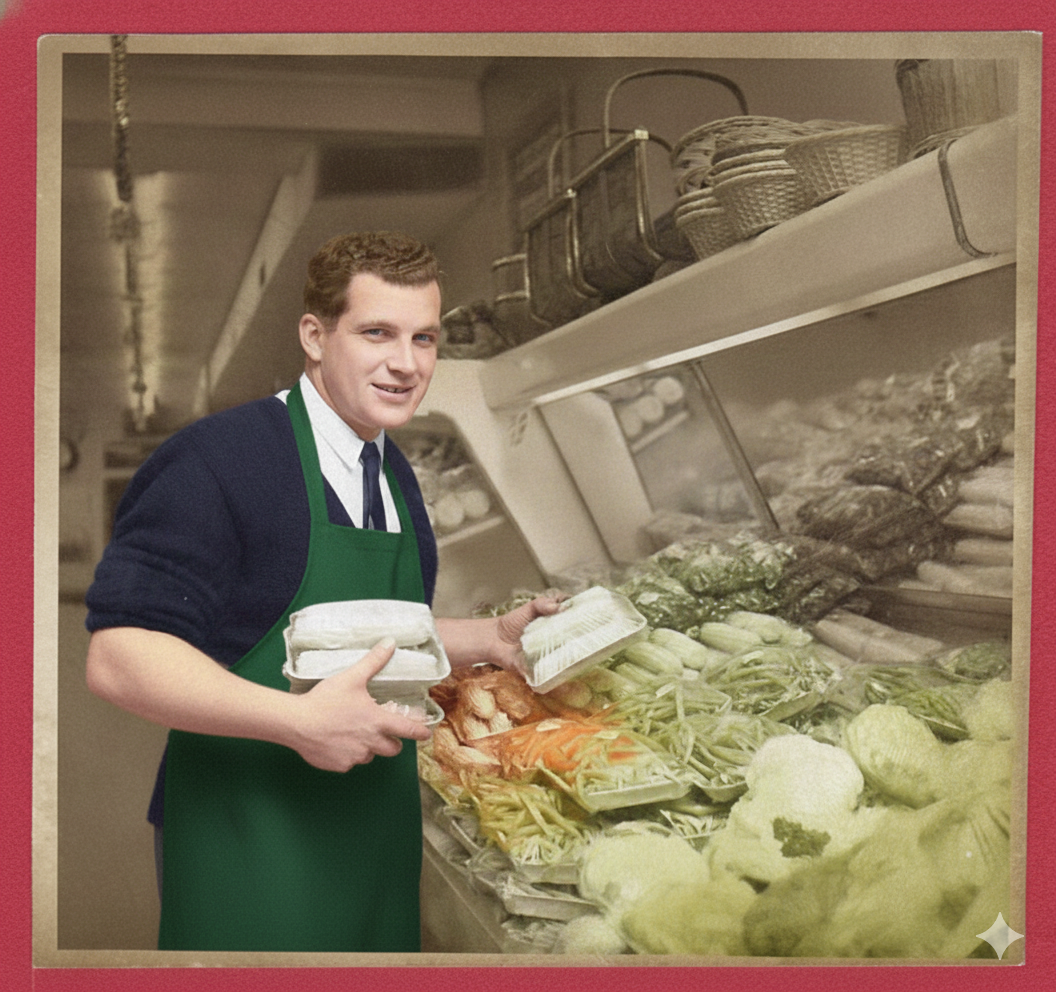
Some of the cereals we have today have been on the market a long time. Quaker Oats, Cream of Wheat, Shredded Wheat and even Puffed Rice and Wheat and Corn Flakes made their appearance. Look at the Cereal shelf of today. Maybe a hundred varieties to select from, all made from the same grains and corn of yesteryear but put up in many different appealing ways.
There were no Cake or roll mixes on the shelves in that early day. These are all products in the last ten of fifteen years. Baking powders, mostly the same brands as of today, and baking soda were an every day shopping list item. Baking Chocolate and Cocoa, the old time variety and not the instant type, were used extensively. Cans of the Black Strap molasses were used in the baking of beans or that delicious sweet dark rye bread which we rarely have today.
Because of the open spaces, since the city was scattered in all directions, folks would have a horse, sometimes a cow or two and a few chickens. This meant that the grocer must also stock Feed to supply the
Flour was one of the big items of the times. Most every one did some if not all of the family baking and the use of the old fashioned dry Yeast Foam by which you set the bread the night before baking was generally used. Some Bread, Rolls, and Doughnuts were sold but not packaged and wrapped as we find them today. The Bread delivery wagons used horses and often-the request came from the housewife that they wished that the delivery men would wear white cotton gloves while handling the baked goods, a suggestion that was frowned upon by the delivery men in general.
You should be able to visualize the candy department. Trays of Licorice sticks, Wine Balls. Peanut Brittle, Fudge squares, Gum Drops, Striped peppermint sticks, and so many other kinds that having a dime to spend for candy was really a treat. Cookies and Crackers were also sold in bulk and most always sampled before purchasing. Some of the cereals we have today have been on the market a long time.Quaker Oats, Cream of Wheat, Shredded Wheat and even Puffed Rice and Wheat and Corn Flakes made their appearance. Look at the Cereal shelf of today. Maybe a hundred varieties to select from, all made from the same grains and corn of yesteryear but put up in many different appealing ways
There were no Cake or roll mixes on the shelves in that early day. These are all products in the last ten of fifteen years. Baking powders, mostly the same brands as of today, and baking soda were an every day shopping list item. Baking Chocolate and Cocoa, the old time variety and not the instant type, were used extensively. Cans of the Black Strap molasses were used in the baking of beans or that delicious sweet dark rye bread which we rarely have today.
Because of the open spaces, since the city was scattered in all directions, folks would have a horse, sometimes a cow or two and a few chickens. This meant that the grocer must also stock Feed to supply the needs. For this reason, hay and straw by the bale, Oats, Bran and Chicken Feed was one the necessary things to stock even in a Grocery Store.
Summing it all up, what a progress there has been in the so-called Grocery Business. What a progress too as a city that began on so small a scale and now is a city we can be proud of, one we enjoy living in and one where our every need can be met as we shop in our Super Markets and Shopping Centers